
Indian Navy's destroyer INS Kochi responded following the attack on the vessel, MV Andromeda Star, on April 26, officials said, adding all the crew members are safe.

The surge in oil prices has also affected the rupee, which hit a 6-week low of 70.25 on Friday against the dollar.

India will pay Iran $900 million in two tranches beginning next week to clear part of the past dues for crude oil it buys from the Persian Gulf nation.

The delegation led by Qasemi arrived on Sunday with the aim of persuading New Delhi to step up both oil imports and investment in the OPEC-member's oil and gas sector.
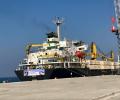
America's decision to give India exemption from imposition of certain sanctions for the development of the port is driven by the South Asian strategy, which was announced by President Donald Trump in August.
Oil prices jumped nearly $3 a barrel and gold and safe-haven bonds rallied on Friday after the killing of top Iranian commander Qassem Soleimani in an airstrike by the US in Baghdad.

Rouhani said people who think Islam is a religion of "violence and terrorism" are wrong in their assessment.

The oil cartel's decision to maintain the production ceiling at its 2016 level, despite the recovery of the world economy, will ensure shortfalls in supply and high oil prices in the foreseeable future, warns Ambassador D P Srivastava.

India on Tuesday sought to downplay the United States's decision of exempting it from economic sanctions for cutting the oil imports from Iran, saying it was a "decision taken by the Obama Administration under its domestic law."
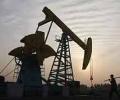
"Today I have made the determination that seven economies -- India, Malaysia, Republic of Korea, South Africa, Sri Lanka, Turkey and Taiwan--have all significantly reduced their volume of crude oil purchases from Iran," Secretary of State Hillary Clinton said in a statement.
India on Tuesday sought to downplay the United States decision of exempting it from economic sanctions for cutting the oil imports from Iran, saying it was a "decision taken by the Obama Administration under its domestic law."
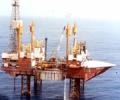
State-own oil explorer Oil and Natural Gas Corporation and the Hinduja group have been offered 40 per cent stake in the development of phase-XII of the giant South Pars gas field of Iran.

Iran's seizure of a British-flagged oil tanker was allegedly due to a collision with an Iranian fishing boat, Iran's official news agency IRNA said.

Under the scheme, National Iranian Oil Co, too, will open an account in a UAE or Turkey-based bank to receive direct money transfer from oil companies.

India's pharmaceutical exports to Iran have been hit owing to depleting rupee reserves in the West Asian country because of India stopping the import of crude oil from it in 2019 following US sanctions. Pharmaceutical exports dropped 71.25 per cent in April-August this year over the same period last year. The data from the Pharmaceutical Exports Promotion Council (Pharmexcil) showed exports to Iran had declined 31.29 per cent in 2022-23 as against the previous financial year.

The foreign ministry's statement came amidst the reported visit of Foreign Minister Sun Weidong to Pakistan on a mediation mission.

India has long been a leader in non-proliferation, stood side by side with all of us in the international community to say that Iran should not acquire a nuclear weapon," US Under Secretary of State for Political Affairs Wendy Sherman told reporters in New Delhi.

Top government officials in New Delhi have started discussions with stakeholders ranging from shipping and container companies to export promotion councils to understand the impact of the Iran-Israel tensions and plan ahead. Inter-ministerial talks are also being lined up amid the crisis situation in West Asia, sources confirmed. While the crude flows are not directly under any threat, elevated oil prices remain a concern, according to officials.

Jaishankar emphasised that the stability of the Middle East region was essential because about one crore Indian citizens live there and said, "a large part of our shipping passes through this region and also, oil comes from there."
More than six months after a Reserve Bank of India order threw out a mechanism to pay for Iranian oil, Oil Minister S Jaipal Reddy on Tuesday said India is trying to ensure uninterrupted supplies of crude from the Persian Gulf nation.
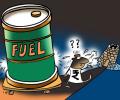
Given that India will get a huge part of its oil supplies from Iran through its government-owned oil PSUs, any unwelcome shocks in global crude rates could be absorbed well enough.

At BSE, 1,799 scrips declined and 714 advanced, while 184 remained unchanged.

The UAE central bank will then make payments in dirhams to Iran.

Rao asserted that India has been transparent on this issue with international partners given its enormous energy security needs.

The falls meant that both crude futures were at their lowest levels since mid-April
External Affairs Minister S M Krishna arrived in Washington to hold the third India-United States Strategic Dialogue with Secretary of State Hillary Clinton during which the two leaders are expected to discuss a range of bilateral and regional issues including Afghanistan and Pakistan.
Amid reports claiming America has threatened India with sanctions if it does not reduce its Iranian oil imports by June end, United States officials on Friday said Washington and New Delhi are having "productive conversations" on the issue and termed the reports as "highly speculative".
United States Secretary of State Hillary Clinton has said that India, along with countries like China and Turkey, is taking steps to reduce its dependency on Iranian oil.
The government is keen on getting global oil majors like Saudi Aramco and National Iranian Oil Corp on board Hindustan Petroleum and Bharat Petroleum through the market route even though privatisation of the state-run oil refining and marketing compa
Tehran is seeking at least 7.2 dollars per mBtu price for gas it wants to sell to India and Pakistan through the over 7 billion dollar pipeline while New Delhi is willing to pay no more than 4.2 dollars per mBtu for gas delivered at its border.
As the Barack Obama administration tries to impress upon India and other nations to join in the US-led sanctions regime against Iran to isolate that country for its alleged nuclear weapons programme and reduce their energy dependence on Teheran, India's Ambassador to the United States Nirupama Rao noted that India's imports of Iranian oil has been on the decline and predicted it may dissipate even further.
The Obama administration is moving ahead with a 'range of steps short of war' that it hopes will forestall an Israeli attack on Iran, while forcing Tehran to take more seriously negotiations that are all but stalemated, a media report on Monday said.
Oil experts from Iran and Pakistan will meet in Teheran on Tuesday to add finishing touches to the $7-billion gas pipeline project linking the two countries as well as India, which is not attending the talks, a media report said.

'Are we to believe that coordinated moves by the Canadian and US authorities are no longer taking place?', asks Ambassador M K Bhadrakumar.

The Reserve Bank of India's rather sudden and unilateral decision to discontinue the Asian Clearing Union, a move that effectively stops settlements in dollars and the Euro, will most impact Mangalore Refinery, which sources 60 per cent of its crude needs from Iran.
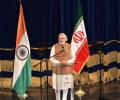
The Modi government caved in under American pressure without even token resistance. Two countries similarly placed as India with high dependence on Iranian oil -- China and Turkey -- have shown the grit to stand up to Washington, says Ambassador M K Bhadrakumar.
